If you’re coming to Spain on a student visa to learn Spanish, the choice often comes down to two cities: Barcelona and Madrid. They’re the country’s largest, best-connected and most famous, and both are packed with Instituto Cervantes-accredited schools that can issue the documentation your visa needs.
So which is better? The honest answer is that neither is “wrong”, they simply suit different students. Below we put them head to head so you can decide which fits your goals, your budget and the kind of year you want.
The quick comparison
| Barcelona | Madrid | |
|---|---|---|
| Best for | International city life by the sea | Pure-Castilian immersion + capital energy |
| Spanish you’ll hear | Spanish + Catalan around the city | Castilian Spanish everywhere |
| Cost of living | Higher | Higher |
| Vibe | Cosmopolitan, relaxed, coastal | Fast-paced, ambitious, central |
| Standout draws | Beaches, architecture, nightlife | Museums, jobs scene, nightlife |
Both cities are wonderful places to spend a study year. The differences are real but a matter of flavour, not quality.
Language and accent
This is the difference most students ask about first.
In Madrid you hear Castilian Spanish, and only Castilian Spanish, more or less everywhere you go: in shops, on the metro, in cafés. That makes it superb for immersion. Every conversation in the street reinforces what you’re learning in class, and the accent you pick up is the “neutral” Spanish many learners aim for.
In Barcelona you’ll hear both Spanish and Catalan around the city, because Catalan is co-official in Catalonia and widely spoken by locals. This sometimes worries students, but it shouldn’t put you off. Spanish is universal in Barcelona, everyone speaks it, and it’s the language you’ll actually study. You can have a complete, immersive Spanish year there without ever needing a word of Catalan. Some students even enjoy the extra linguistic backdrop.
The honest take: if maximum pure-Castilian immersion is your single top priority, Madrid has a slight edge. If you’re happy to hear two languages around town while you study Spanish, Barcelona is no obstacle at all.
Cost of living
Both Barcelona and Madrid sit at the higher end for Spain. As the two biggest cities, rent, eating out and going out all cost more than in smaller cities like Granada, Seville or Salamanca.
Between the two, the picture is broadly similar, and prices shift year to year and neighbourhood to neighbourhood, so we won’t pretend one is reliably “cheaper”. The practical point is the same for both: budget more than you would for a smaller city, and look at sharing a flat to keep costs sensible. If keeping spending low is your number-one concern, you may want to read our wider comparison of student cities in Spain, where several options come in well below these two.
Lifestyle
This is where the two cities feel most different.
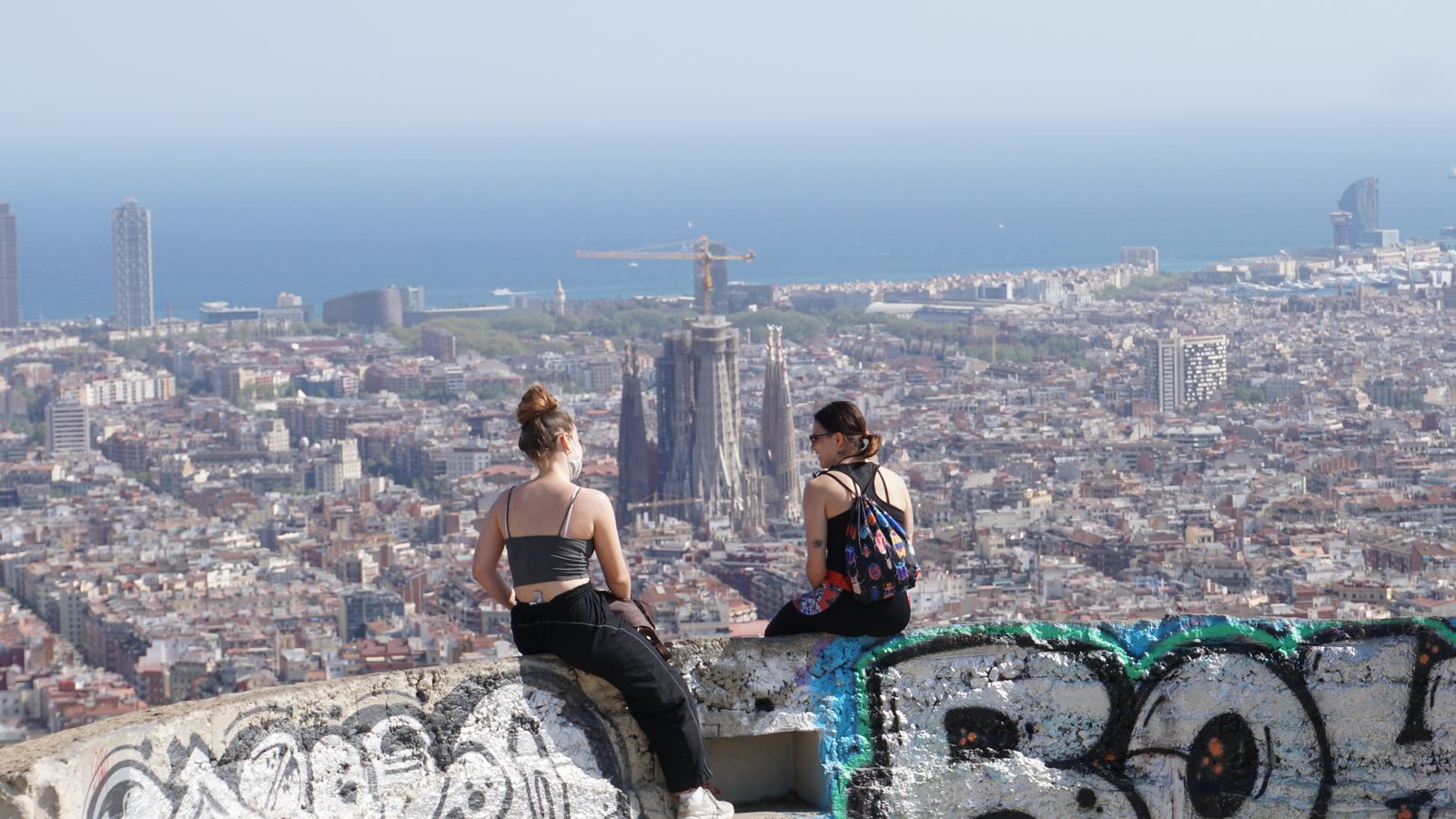
Barcelona is coastal and cosmopolitan. You can finish class and be on the beach within the hour. It’s one of the most international cities in Europe, with people from all over the world, a famous architecture trail (Gaudí and beyond), and a relaxed, Mediterranean rhythm. The flip side of being so international is that you’ll meet a lot of other foreigners, which is great socially but means you have to make a bit more effort to seek out Spanish-speaking situations.
Madrid is the capital, and it feels like it: ambitious, fast-paced and proudly Spanish. It’s landlocked and central, with world-class museums (the Prado, Reina Sofía and Thyssen all within walking distance), grand plazas, and a nightlife that genuinely doesn’t stop. It feels less aimed at tourists and more like the real, working heart of Spain, which many students find deepens their immersion.
The honest take: Barcelona for sea, international buzz and a laid-back pace; Madrid for capital-city energy and a more thoroughly Spanish day-to-day.
Student and career scene
Both cities have large student populations and plenty of accredited schools to choose from, so you’ll find a course and a community in either.
If you’re thinking beyond the classroom, Madrid generally has the stronger jobs and internships scene as Spain’s business and political capital, which is worth weighing up if you hope to gain work experience or stay on. Barcelona has its own thriving job market, especially in tech, design and tourism, plus that huge international network that can open doors of a different kind. Remember that what you can do work-wise depends on your visa, so check the current rules before you count on it.
So which should you choose?
A simple way to decide:
- Choose Madrid if your priority is pure-Castilian immersion, you want big-capital energy and culture, and a strong jobs and internship scene matters to you.
- Choose Barcelona if you want an international, by-the-sea city with a relaxed pace, world-famous architecture, and you don’t mind hearing Catalan alongside the Spanish you’re studying.
Whichever way you lean, the visa process is identical, and your school simply needs to be Instituto Cervantes-accredited to issue valid documentation. Explore schools in Barcelona and schools in Madrid, or compare them against the rest of the country in our guide to the best cities in Spain for students.
← All articlesReady to decide? Browse accredited schools by city, and when you enrol through us we negotiate a €500 discount on your course and make sure your acceptance letter meets the latest consulate requirements.