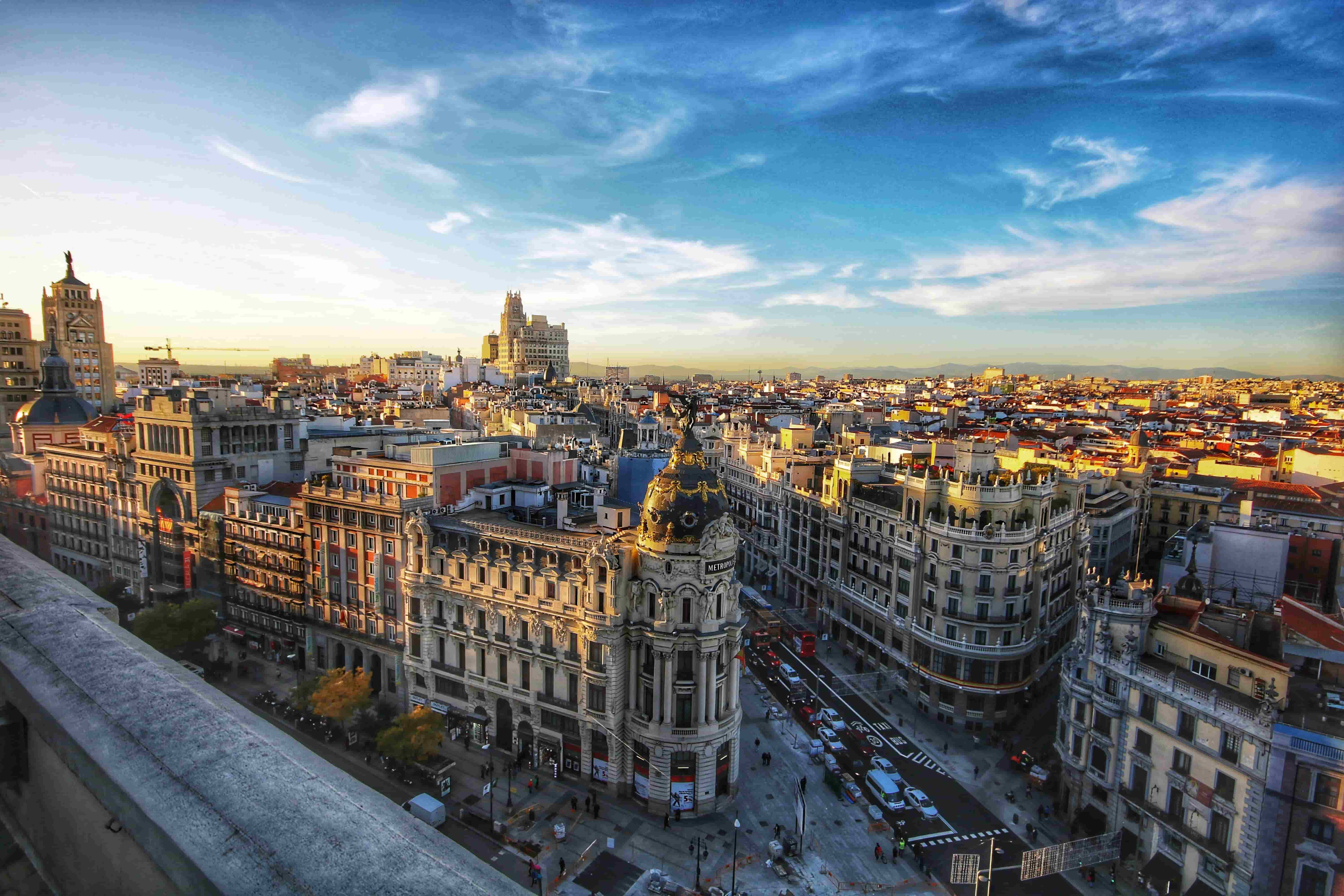
Is Madrid the right city for you?
Madrid is Spain's capital and its largest city — and it has more Instituto Cervantes accredited schools than anywhere else in the country. If school choice matters to you, Madrid wins outright. It's also the most connected city in Spain for international travel, with the best metro system, the best road and rail links, and the most direct flights.
The city is genuinely Spanish in character despite its size — unlike Barcelona, there's no competing regional language, so your daily immersion is solid. The downside is the climate: Madrid winters are genuinely cold (temperatures regularly drop below 5°C) and summers are scorching, which makes spring and autumn the best times to be there.
💡
The honest take: Madrid is the best city for students who want the full Spanish capital experience — culture, food, nightlife, connections — and the widest school choice. It's not the cheapest, it has no beach, and winters are colder than the south. But for sheer quality of life and practicality, it's hard to argue with.
Where to live — Madrid neighbourhoods
Malasaña / Chueca
Central · lively
The most popular neighbourhoods for young expats and language students. Bohemian, packed with bars and cafés, very central. Expensive but worth it for the social life.
Shared room: €700–900/mo
Lavapiés
Best value central
Multicultural, gritty, and genuinely affordable for central Madrid. Great food from every part of the world. Popular with students and artists. Very local feel.
Shared room: €580–750/mo
Chamberí
Residential · authentic
One of Madrid's most traditionally Spanish neighbourhoods. Quieter than Malasaña, great local bars and markets, popular with professionals. Good value for the quality.
Shared room: €650–850/mo
Argüelles / Moncloa
Student area
The classic student neighbourhood near the Complutense University. Good value, young crowd, lots of language students. Close to El Retiro and the Casa de Campo.
Shared room: €600–780/mo
Carabanchel / Leganés
Budget · outer
The most affordable areas within reasonable distance of the centre. Very local, minimal English spoken, good metro connections. Ideal for students on tight budgets.
Shared room: €480–620/mo
Salamanca district
Upscale
Madrid's smartest neighbourhood — expensive, elegant, and very Spanish. Good if you want a calmer, more affluent base. Several language schools are based nearby.
Shared room: €850–1,100/mo
Cost of living
Madrid is cheaper than Barcelona but more expensive than the southern cities. Rent is the main variable — the centre costs significantly more than outer districts. The metro is excellent and cheap, which makes living further out more practical than in other cities.
| Rent — shared flat, central | €650–900/mo |
| Rent — shared flat, outer district | €480–640/mo |
| Monthly metro pass | ~€55/mo |
| Groceries (cooking at home) | €160–220/mo |
| Eating out — menú del día | €10–13/meal |
| Coffee | €1.20–1.80 |
| Beer in a bar | €2.50–4 |
| Health insurance (visa compliant) | €40–55/mo |
Realistic total budget
excl. course fees · central area
€1,300–1,700/mo
Practical tips for Madrid students
Pack for proper winters. Madrid gets cold — temperatures below freezing are possible from December to February. A proper coat is essential. The flip side is spring (March–May) and autumn (September–November) are glorious.
The metro is excellent. A monthly Abono Transportes pass covers Metro, Cercanías trains, and buses. Buy it at any metro station. Far cheaper and more practical than taxis.
Lunch is the main meal. The menú del día (€10–13 for three courses) is how Madrileños eat on weekdays. Dinner is late — restaurants don't fill up until 9:30–10pm. Adjust your eating schedule and your budget will thank you.
El Rastro market (Sunday mornings in Lavapiés) is worth going to at least once — and the surrounding tapas bars are excellent post-browse. Mercado de San Miguel is beautiful but expensive; shop at Mercadona for day-to-day groceries.
Madrid's museum quarter is extraordinary — Prado, Reina Sofía, and Thyssen-Bornemisza are all within walking distance of each other. Most offer free entry on certain evenings. Take advantage of it.